
Ever watched a commercial claiming that 99.9% of bacteria will be killed, or that 4 out of 5 dentists recommend a particular brand? Numbers like these may sound convincing, but how confident can we be that they reflect the bigger picture?
When it comes to market research, survey results are based on a sample of people rather than the entire population. This means there is always some level of uncertainty around the results. This is where Margin of Error comes in.
What Is the Margin of Error?
Margin of error tells us how much a survey result may differ from the actual result in the wider population. It is usually expressed as a plus-or-minus (±) figure, giving us a range around the survey result.
For example, if a survey finds that 60% of consumers prefer Brand A, with a ±5% margin of error, the result suggests that the actual proportion in the wider population could be around 55% to 65%, based on the study’s statistical assumptions.
In simple terms, margin of error helps us understand how much uncertainty comes with a survey result.
What Affects the Margin of Error?
A survey’s margin of error is influenced by several factors, including how many people were surveyed, and how responses are distributed across the sample, and the confidence level used in the study.
Sample size matters. Generally, the more people you survey, the more precise your results become. For example, a sample of 400 can produce a margin of error of approximately ±5%, while a sample of around 1,100 can bring it down to approximately ±3%, assuming a 95% confidence level and other standard assumptions.
More respondents generally mean more precise results, but there comes a point where adding more respondents makes only a small difference. For businesses, this means that simply aiming for the largest possible sample may not always be the most efficient use of time and budget. The right sample size should be based on the research objectives, target population, and level of precision needed to make a confident business decision.
The proportion of respondents giving a particular answer also affects the margin of error. Results around 50% generally have the largest margin of error, while results closer to 0% or 100% tend to have a smaller one. This is because responses are more evenly split when a result is around 50%, creating greater uncertainty in the estimate.
The confidence level also affects the margin of error. It indicates how certain we can be that the estimated range includes the true population value. A higher confidence level increases the certainty, but it also results in a wider margin of error. In market research, a 95% confidence level is commonly used.
Most importantly, sample size alone does not determine the quality of a study. If the wrong people are surveyed or the research methodology is flawed, the findings can still be inaccurate—even with thousands of respondents.
Why Does Margin of Error Matter in Market Research?
For businesses, survey results are often used to make important decisions—from understanding brand awareness and purchase intent to measuring customer satisfaction, testing new concepts, understanding market preferences, and tracking changes over time.
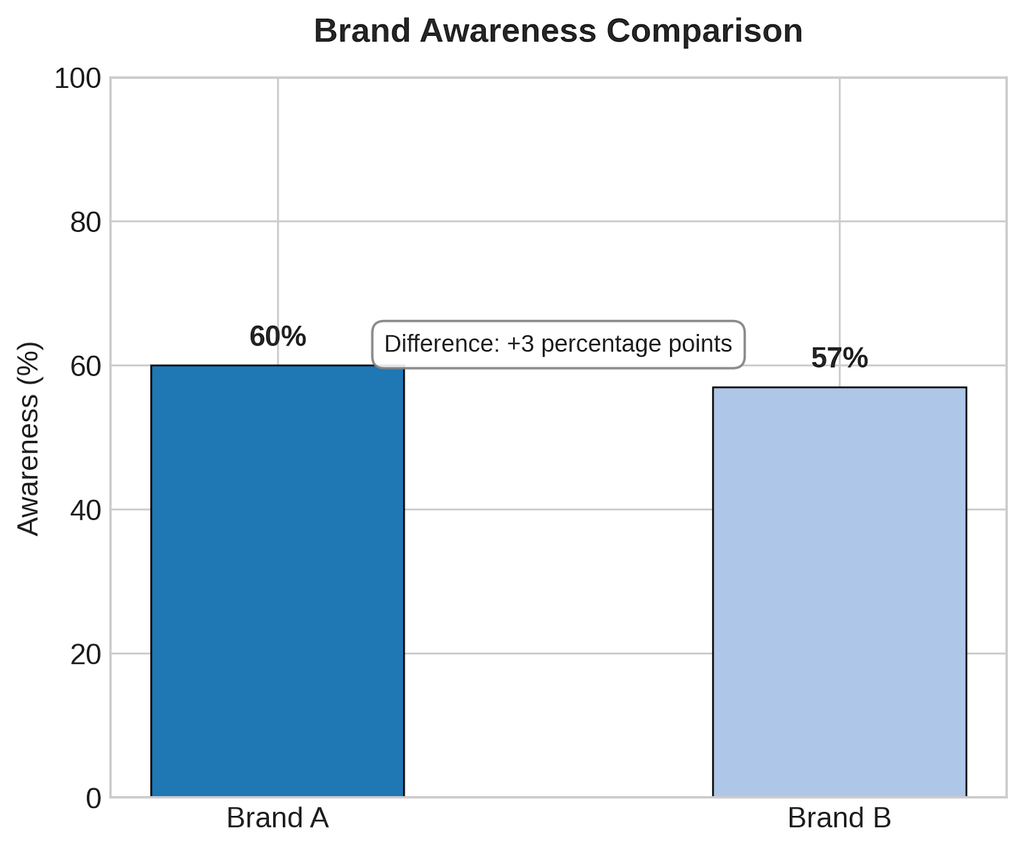
Consider a simple example: Brand A has 60% brand awareness, while Brand B has 57%. At first glance, Brand A appears to be ahead by 3 percentage points. But is that difference meaningful, or could it simply be variation within the sample?
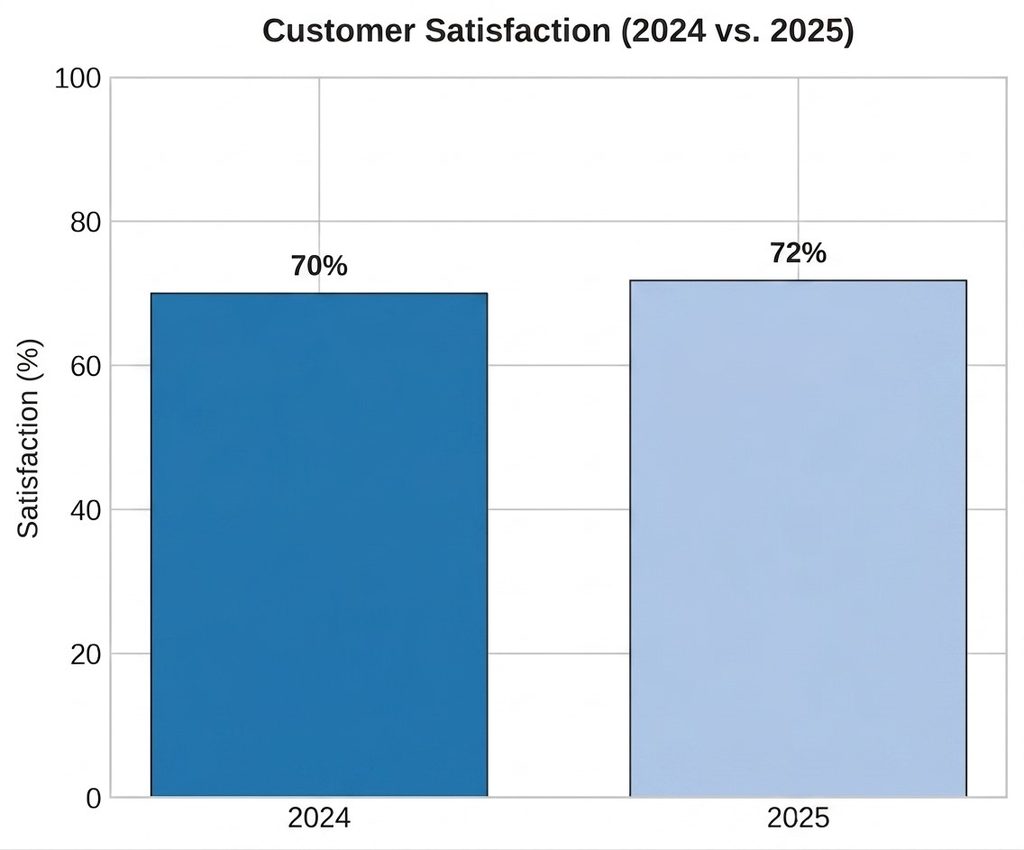
The same applies to tracking studies. If customer satisfaction increases from 70% to 72%, it may be tempting to conclude that satisfaction has improved. However, the change may not be large enough to indicate a genuine shift in the wider market.
This is why survey numbers should not be viewed in isolation. Researchers need to consider the sample size, sampling approach, margin of error, and overall study design when determining whether a finding represents a meaningful difference or simply normal variation in the data.
Beyond the Numbers: How RLR Can Help
At RLR Research & Analysis, we believe that good research goes beyond collecting survey responses. The value of research lies in knowing how to ask the right questions, reach the right people, and interpret the results correctly.
From determining the appropriate target respondents and sample size to designing questionnaires, conducting fieldwork, and analyzing findings, our team develops research approaches designed to deliver reliable and actionable insights.
Whether you want to measure brand performance, understand your customers, test a new concept, track changing market preferences, or validate a business opportunity, RLR can help you turn data into insights—and insights into more confident business decisions.
Have a business question? Let RLR help you find the answers through research.
