As election surveys continue to attract public attention ahead of every Philippine election, questions about their influence, credibility, and proper interpretation remain just as relevant as the numbers themselves.
To encourage meaningful dialogue on these issues, the Marketing and Opinion Research Society of the Philippines (MORES Philippines) hosted its fireside chat, “Beyond Percentages: What Election Surveys Really Tell Us,” on July 13, 2026, at Podium Hall, Ace Hotel & Suites, Pasig City. The event brought together leaders from government, public opinion research, media, and academia to examine how election surveys influence public discourse and how greater transparency and responsible communication can strengthen public trust in research.
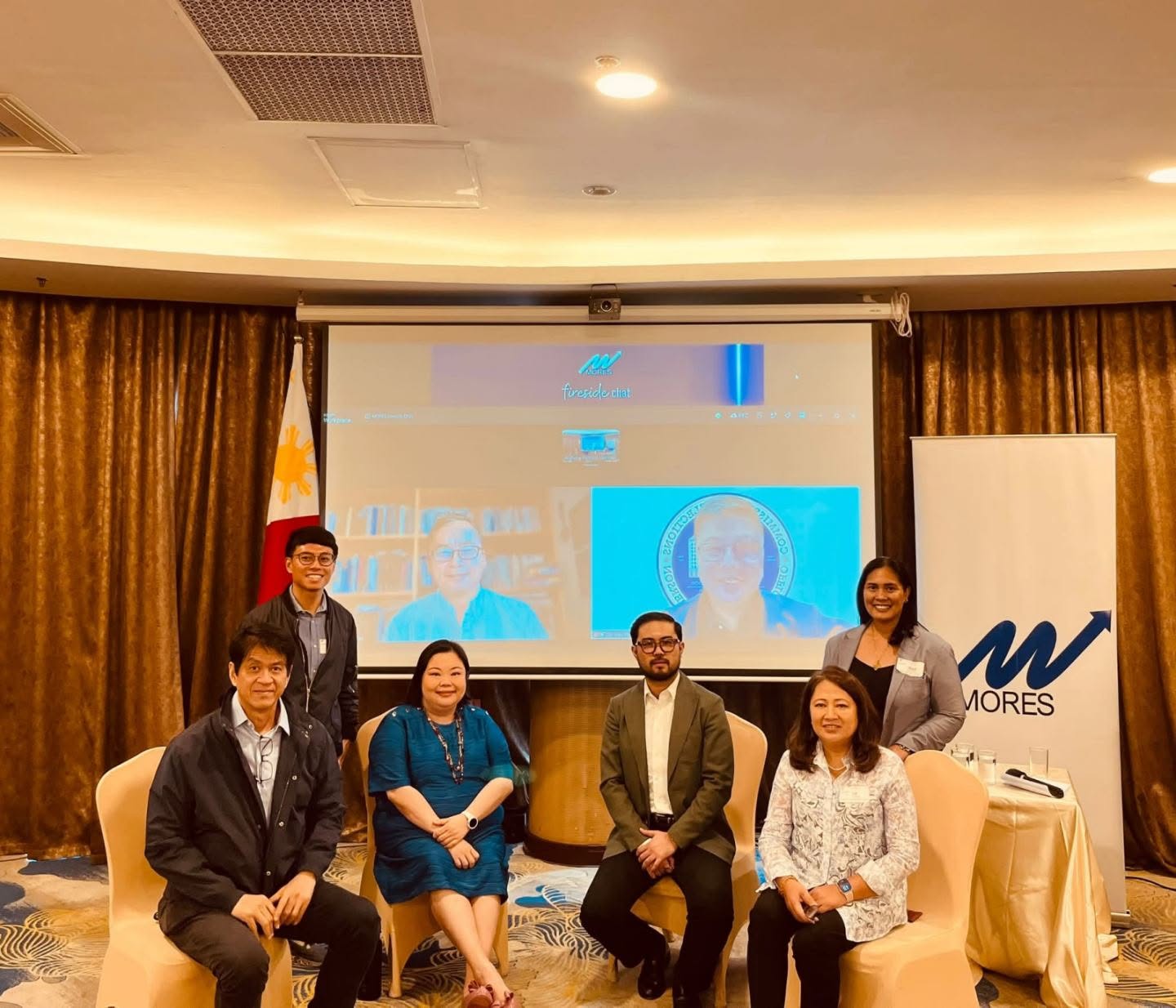
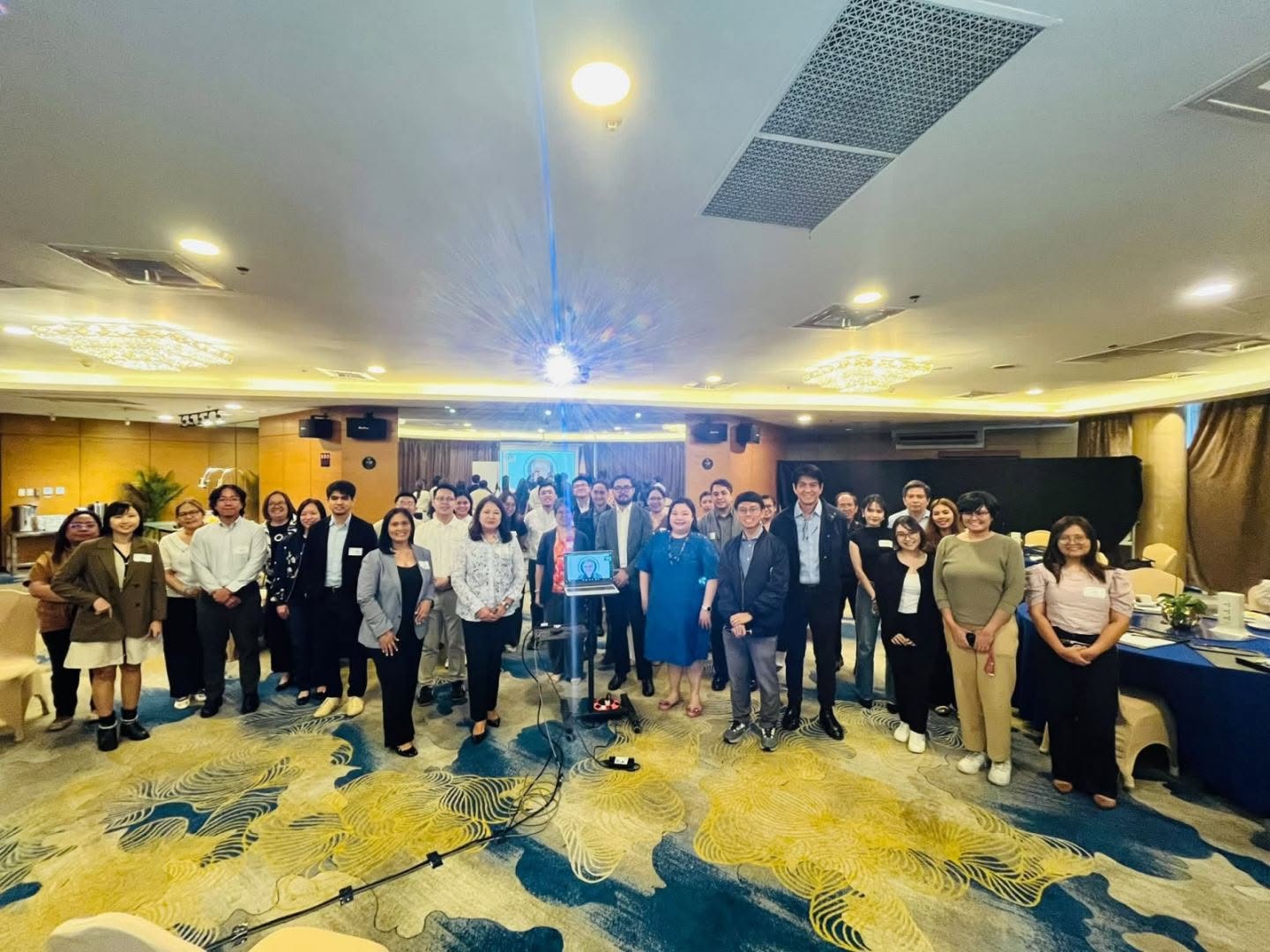
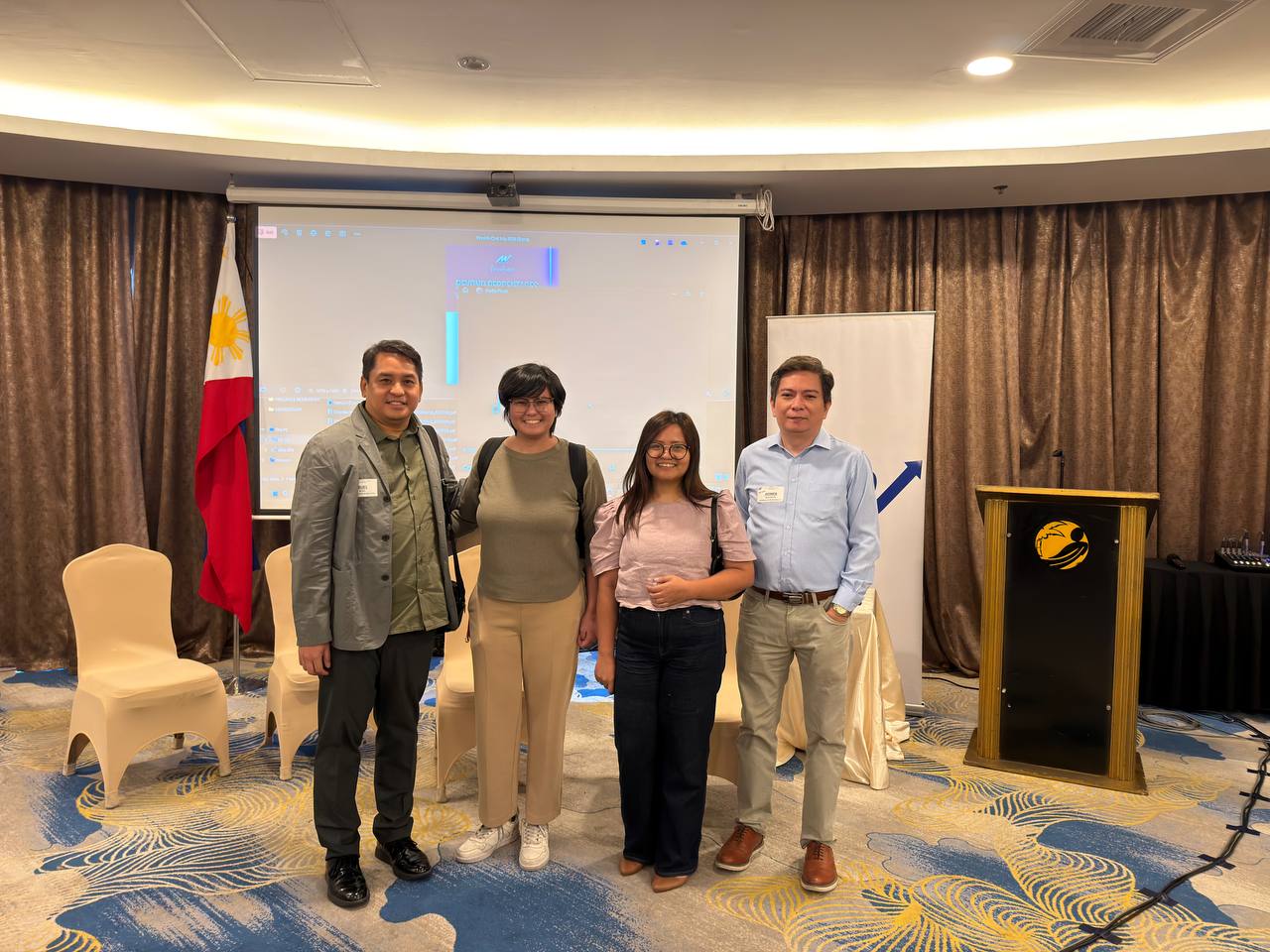
Photo Courtesy of: MORES Philippines and Abigail Quijano
The panel featured Atty. John Rex Laudiangco, Official Spokesperson of the Commission on Elections (COMELEC); Dr. Ronald Holmes, President of Pulse Asia; Cleave Arguelles, Founder and CEO of Momentum Research; and Joyce Pañares, Managing Editor of Manila Standard and Training Director of the Philippine Press Institute. The discussion was moderated by GR Ariston and Nicco de Jesus, who guided the conversation through topics including voter behavior, polling methodologies, media responsibility, and the growing challenge of misinformation during elections.
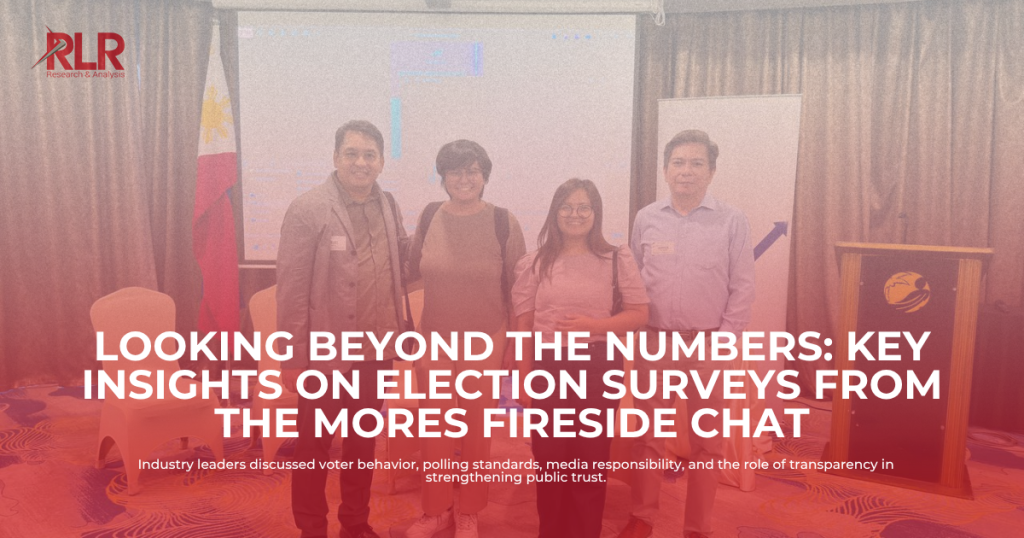
Also in attendance were representatives from RLR Research & Analysis—Ruel Rosal (President & CEO), Homer Marundan (Research Director), Abigail Quijano (Junior Research Director), and Nancy Fernandez (Junior Research Manager)—who joined fellow members of the research community in the exchange of ideas and best practices on public opinion research.
Election Surveys Inform–They Don’t Decide
One of the first questions raised during the fireside chat was perhaps the most familiar: Do election surveys influence how people vote?
Dr. Holmes explained that while concepts such as the bandwagon effect, the underdog effect, and strategic voting have long been discussed in political science, there is still no conclusive evidence that published surveys alone determine electoral outcomes. Voters are exposed to many influences—from campaign messaging and news coverage to conversations within their communities—and surveys are only one source of information among many.
Building on this point, Arguelles said that voting behavior in the Philippines is shaped by a range of social, cultural, and political factors, with ethnolinguistic identity remaining one of the strongest predictors of voting preference. At the same time, he emphasized that Filipino voters are far from monolithic. Some base their choices on candidates’ platforms and policy positions, while others are influenced by personalities, emotions, or how candidates present themselves to the public. He also noted that many Filipinos finalize their choices much later than commonly assumed, with a large share of the electorate deciding only during the final week of the campaign—or even on Election Day itself. This fluidity, coupled with the tendency to overestimate under-voting, reinforces the idea that election surveys should be viewed as snapshots of public opinion at a specific point in time rather than definitive predictions of election results.
Transparency Builds Confidence
The discussion then turned to COMELEC’s efforts to improve transparency in election surveys.
Atty. Laudiangco clarified that COMELEC’s registry for survey practitioners is not intended to regulate or censor research organizations. Instead, it aims to encourage greater openness by making important survey information—such as methodologies, sample sizes, fieldwork dates, sponsors, funding sources, geographic coverage, margins of error, and, where applicable, raw data—available for public scrutiny.
He explained that this approach allows researchers, journalists, and the public to evaluate survey quality more critically. By placing methodological information in the open, legitimate practitioners are better equipped to challenge questionable surveys through scientific scrutiny and peer evaluation rather than regulatory intervention.
Arguelles agreed that transparency is essential but emphasized that scientific standards are best upheld within the research community itself. Methodologies, he said, should continue to be evaluated through professional debate and peer review.
Context Gives Numbers Meaning
Pañares reminded participants that survey results carry significant influence because people naturally perceive numbers as objective. That makes context just as important as the data itself. Journalists, she said, have a responsibility to explain who commissioned a survey, how it was conducted, and what its findings actually mean—not simply report rankings or percentages.
She also highlighted the growing threat of malinformation—the deliberate use of accurate information presented out of context to create misleading narratives. Unlike misinformation, which stems from false or inaccurate information, malinformation manipulates genuine data to influence public opinion. The panel agreed that helping audiences understand both the strengths and limitations of survey findings is an important safeguard against this emerging challenge.
Why Methodology Still Matters
The conversation also explored the growing use of online surveys and AI-assisted research.
While these approaches have expanded the research toolkit, panelists agreed that face-to-face probability sampling remains the gold standard for measuring national public opinion. Given the country’s uneven internet access and the need for representative sampling, carefully designed face-to-face surveys continue to provide the most reliable picture of the electorate.
Equally important is transparency. Publishing methodological details allows researchers, journalists, and the public to examine survey quality, identify weak or misleading claims, and distinguish credible public opinion research from unscientific polling.
Looking Ahead
As future elections unfold amid faster news cycles and an increasingly digital information landscape, the responsibility to communicate survey findings accurately extends beyond research organizations. Journalists, policymakers, educators, and the broader research community all have a role to play in ensuring that data is interpreted responsibly and placed in its proper context. When rigorous methodology is paired with transparency and responsible reporting, election surveys become a valuable resource for informed public discourse and a stronger democratic process.
